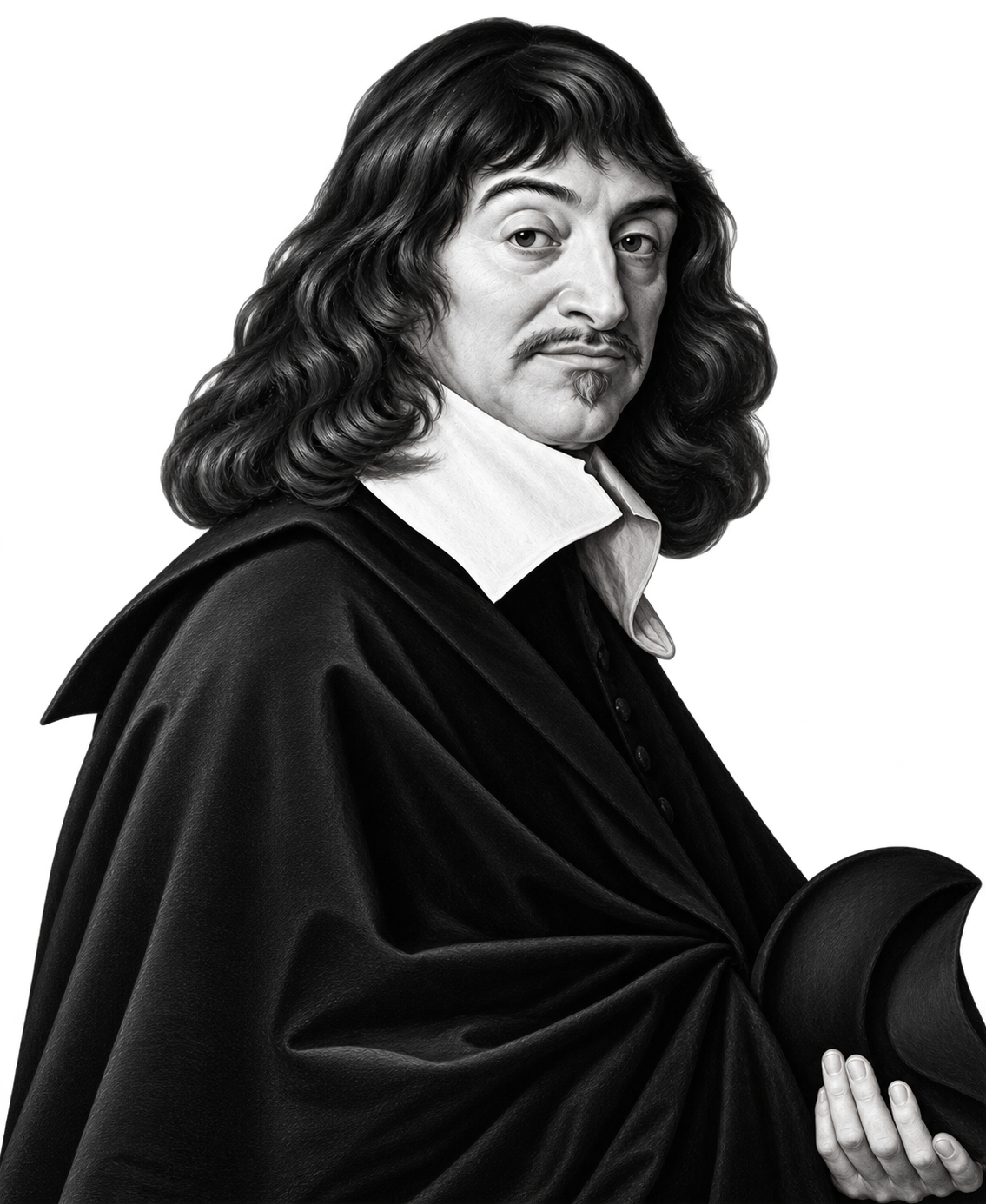
RATIONALISM · PHILOSOPHY OF MIND
René Descartes
1596–1650
“I think, therefore I am.”— Discourse on the Method (1637)
01 / INTRODUCTION
TRIA explores the human being through three connected dimensions — the body, the intellect, and self-awareness. A framework for observing how they interact, shape experience, and influence the way we understand ourselves.
02 / THREE DIMENSIONS
Explore the physical dimension of your personality: energy, endurance, sensitivity, activity, and interaction with the world around you. Discover how your body influences your well-being, behaviour, and everyday life.
Explore the intellectual dimension of your personality: logic, attention, memory, imagination, and the ability to analyse information. Discover how you perceive the world, process information, and make decisions.
Explore your ability to understand yourself, recognise your motives, evaluate your actions, and become aware of inner conflicts. Discover how deeply you understand yourself and your own reactions.
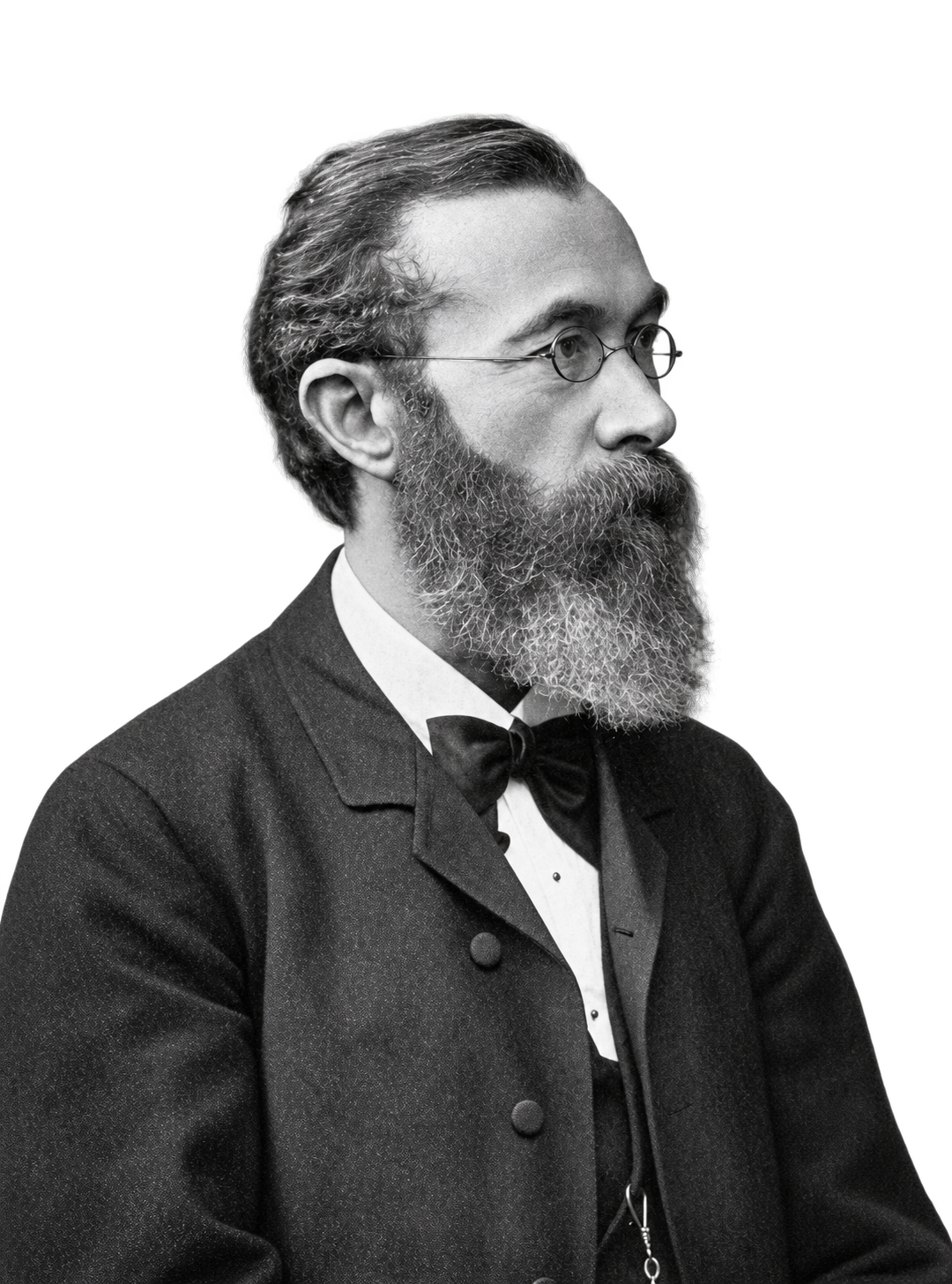
03 / The Origins of Experimental Psychology
Sensation and feeling are complementary components of our psychological experience.
Homeostasis Point — the system’s point of balance, representing the pursuit of inner and physical stability.
SYNEIDESIS — the dimension of self-awareness, reflection, and understanding your motives and inner processes.
NOUS — the dimension of thought, intellect, information processing, and decision-making.
Cognition Point — the point of cognition, representing the perception, processing, and interpretation of information.
SOMA — the dimension of physical condition, energy, and the body’s interaction with the surrounding world.
05 / Philosophical & Psychological Lineage
From the philosophy of thought to psychoanalysis and analytical psychology, these thinkers developed different ways to investigate the mind, consciousness, and the self.
RATIONALISM · PHILOSOPHY OF MIND
1596–1650
“I think, therefore I am.”— Discourse on the Method (1637)

CRITICAL PHILOSOPHY · THEORY OF KNOWLEDGE
1724–1804
“Thoughts without content are empty; intuitions without concepts are blind.”— Critique of Pure Reason (1781/1787)
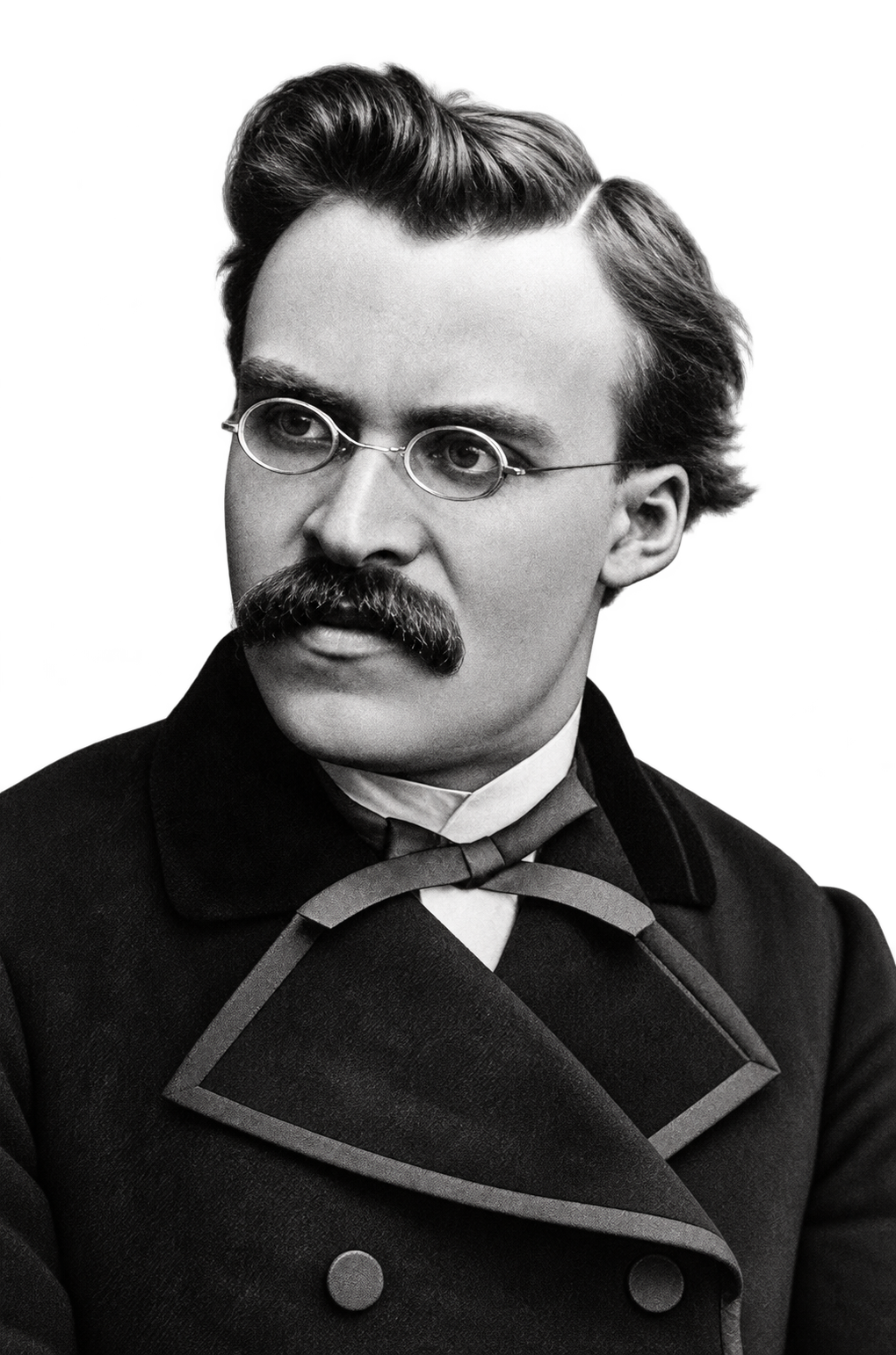
PHILOSOPHY OF VALUES · EXISTENTIAL THOUGHT
1844–1900
“One must still have chaos in oneself to be able to give birth to a dancing star.”— Thus Spoke Zarathustra (1883–1885)
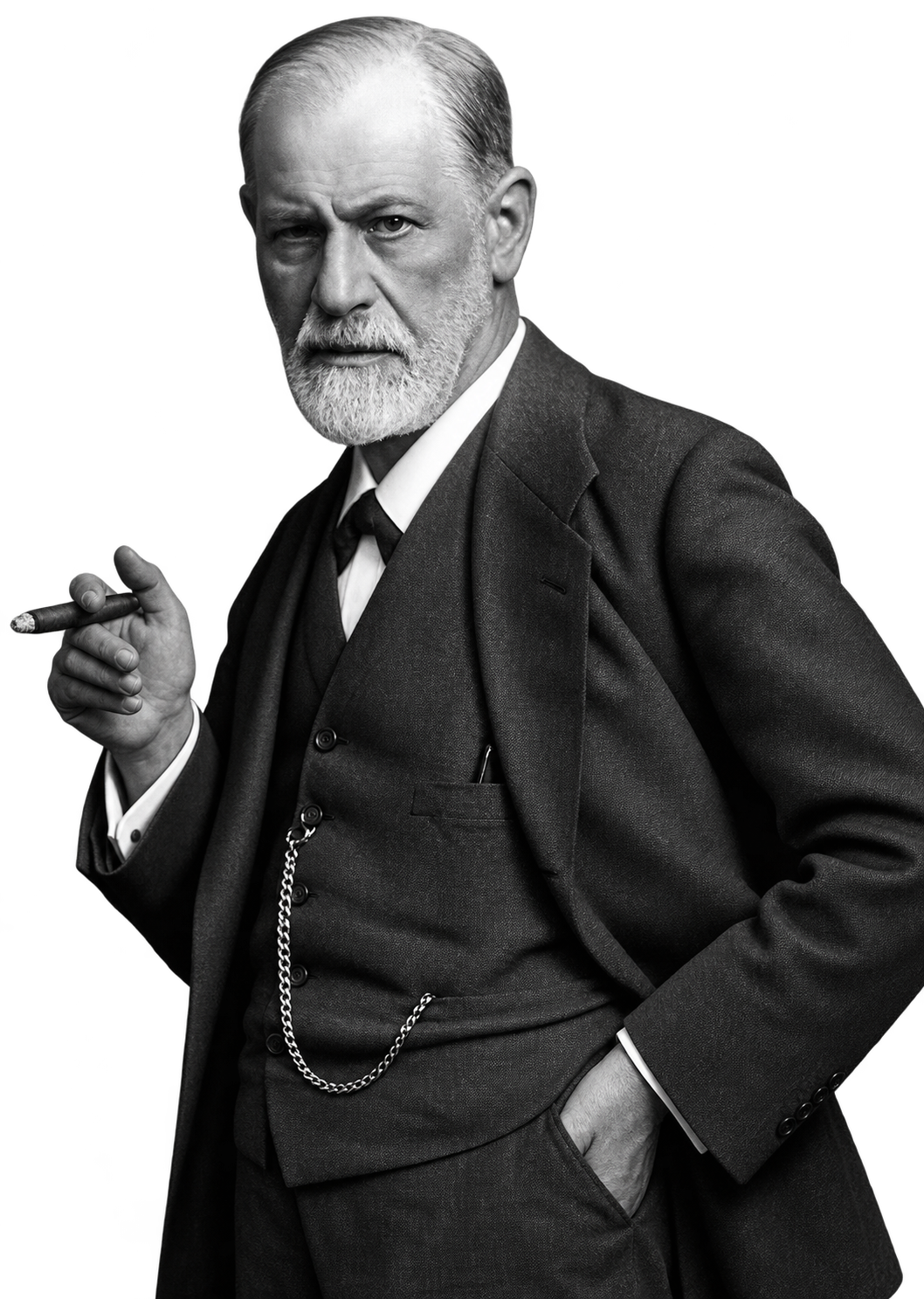
PSYCHOANALYSIS · DREAM INTERPRETATION
1856–1939
“The interpretation of dreams is the royal road to a knowledge of the unconscious activities of the mind.”— The Interpretation of Dreams (1899/1900)
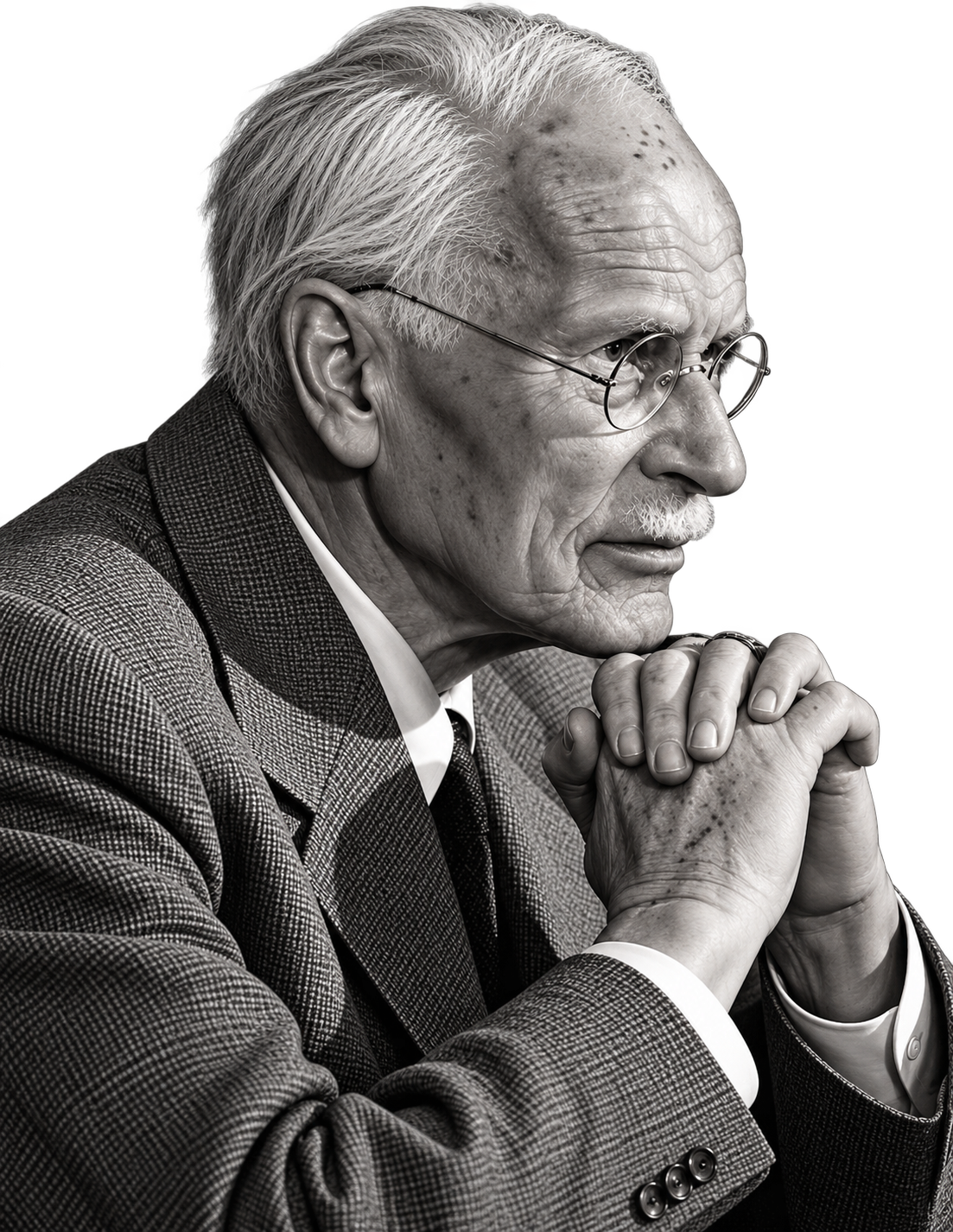
ANALYTICAL PSYCHOLOGY · ARCHETYPES
1875–1961
“The meeting of two personalities is like the contact of two chemical substances: if there is any reaction, both are transformed.”— The Psychology of the Transference (1946)
06 / TEST COMPARISON
Three levels. Three different depths of exploration. Compare what each TRIA test offers and choose the path that fits your goals.
| Feature | testDRIVEDISCOVER | testFULLUNDERSTAND | testUNIVERSEREALIZE |
|---|---|---|---|
| Purpose | First insight into yourself | Deeper understanding | Comprehensive self-discovery |
| Individual traits | Key traits | Detailed | Detailed + interconnections |
| Strengths | Brief overview | Detailed description | Detailed description + application |
| Weaknesses | General tendencies | Detailed description | Detailed description + ways to work on them |
| Shadow sides | — | Analysis | In-depth analysis |
| Interactions between dimensions | — | Key connections | A comprehensive picture |
| Personalized recommendations | Brief | Expanded | Expanded and practical |
| Personal summary | Brief conclusion | Detailed profile | Profile + development strategy |
Swipe horizontally to compare
Open full comparison